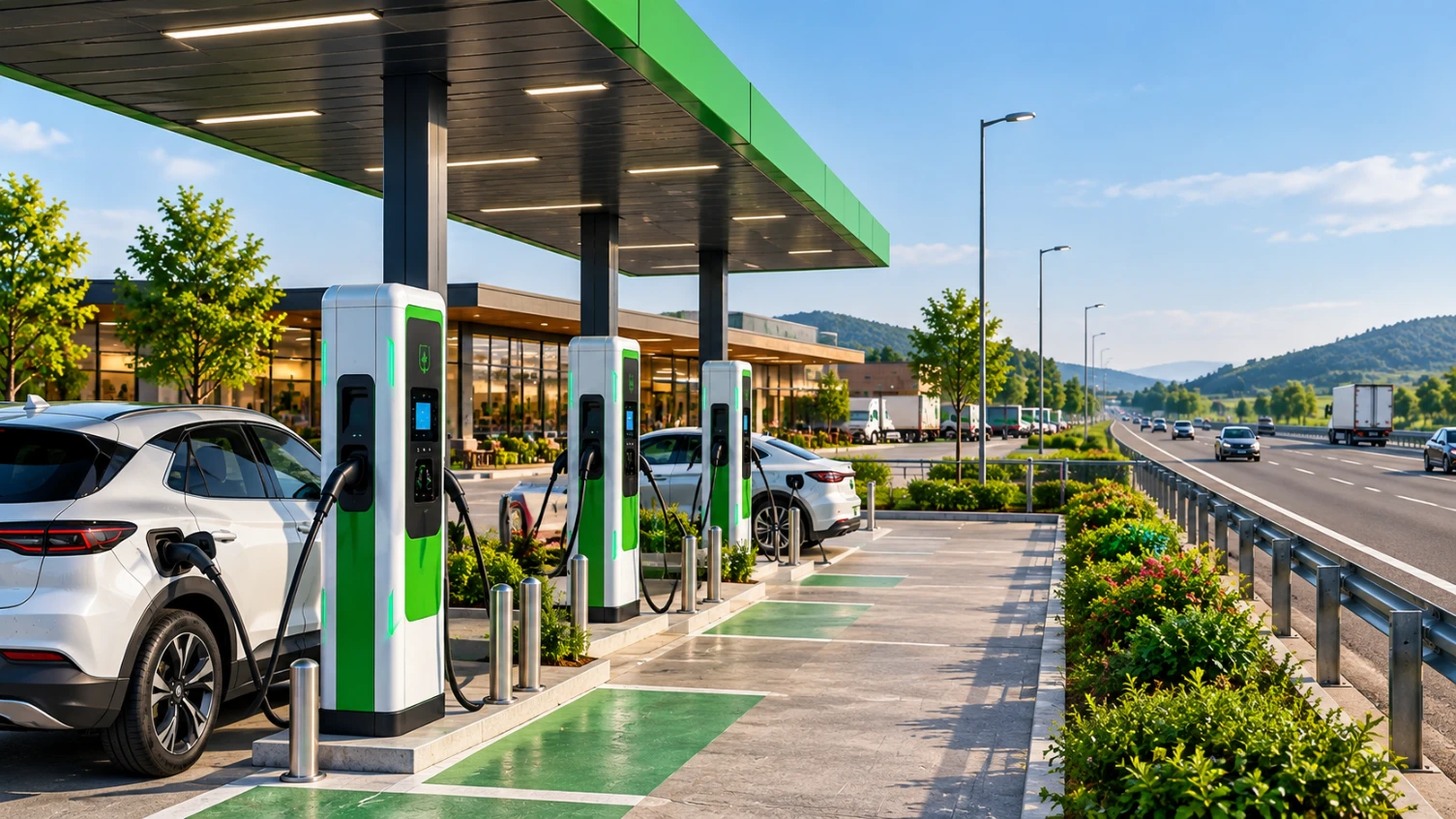
How to Set Up a Highway EV Charging Station in India: Complete Guide
India's electric vehicle ecosystem is expanding beyond major cities. As EV owners increasingly travel between cities, the availability of reliable highway EV charging stations is becoming an important part of long-distance electric mobility.
Unlike urban charging locations, highway charging stations serve customers who may have a very specific requirement:
They need to charge their vehicle quickly and continue their journey.
This makes highway charging different from charging at an office, hotel or residential property.
A successful highway EV charging station requires careful planning around location, road accessibility, EV traffic, charger capacity, electricity infrastructure, land, amenities, operating costs and customer experience.
This guide explains how to set up a highway EV charging station in India and the key factors you should consider before investing.
Why Highway EV Charging Stations Are Important
One of the biggest concerns for long-distance EV travel is access to dependable public charging.
A driver planning a 300 km, 500 km or 1,000 km journey needs confidence that charging will be available along the route.
Highway charging stations can help address this requirement by providing:
- DC fast charging
- Convenient travel stops
- Multiple charging points
- Rest facilities
- Food and beverages
- Parking
- Reliable charging infrastructure
As EV adoption increases, strategically located highway charging stations can become important infrastructure for intercity travel.
What Makes a Good Highway EV Charging Station?
A highway station needs more than a charger next to a road. The ideal location should combine:
A station may have excellent chargers but still perform poorly if drivers have difficulty finding or accessing it.
10 Steps to Set Up a Highway EV Charging Station
Select the Right Highway Location
Location is the most important decision. When evaluating a highway site, consider:
Traffic Volume
Check the number of vehicles using the road. But remember that total traffic is only one factor. You also need to understand the likely percentage of EVs and future EV growth.
EV Traffic
Look for routes connecting:
- Major cities
- Business centres
- Tourist destinations
- Industrial areas
- Airports
- Ports
- Logistics hubs
These routes may have stronger potential for EV charging demand.
Accessibility
Drivers should be able to enter the station without a major detour. Consider:
- Entry and exit
- Road visibility
- U-turn requirements
- Service roads
- Turning radius
- Parking access
A station that requires a significant detour may be less attractive to travelers.
Evaluate the Land
A highway EV charging station requires adequate space for vehicles, chargers and supporting infrastructure. Depending on the station design, space may be needed for:
- Charging bays
- Vehicle movement
- Parking
- Transformer
- Electrical equipment
- Customer facilities
- Restrooms
- Food outlets
- Canopy
- Signage
The land does not necessarily have to be purchased. Depending on the business arrangement, operators may use:
- Owned land
- Leased property
- Partner locations
- Commercial properties
- Existing fuel stations
- Restaurants
- Hotels
The important factor is whether the property is commercially and technically suitable.
Check Electricity Availability
Highway charging stations generally require significant electrical capacity, particularly when multiple DC fast chargers are installed. Before finalizing the site, assess:
- Existing electrical connection
- Available sanctioned load
- Required charging capacity
- Transformer requirements
- Cable requirements
- Electrical infrastructure
- Future expansion requirements
For example, a station with several high-power DC chargers can have substantially greater power requirements than a small AC charging point.
Select the Right EV Chargers
Highway customers generally value charging speed. For this reason, DC fast chargers are commonly considered for highway applications. Depending on the location and expected demand, operators may consider:
- 60 kW — Can be suitable for smaller or moderate-demand highway locations.
- 120 kW — Can provide faster charging and may suit busy intercity routes.
- 180 kW — Can be considered for higher-demand highway charging hubs.
- 240 kW — May be appropriate for high-traffic locations where high-power charging and the required electrical infrastructure can be justified.
The highest-powered charger isn't automatically the best option. The charger should match:
Install Multiple Charging Points
A highway charging station should ideally be designed around customer demand rather than a single charger. If several EVs arrive at the same time, having multiple charging points can reduce waiting.
For example, a charging hub could include:
- Multiple DC fast chargers
- AC chargers for longer stays
- Dedicated fleet charging points
The exact configuration should depend on the expected vehicle mix and site economics.
Provide Essential Customer Amenities
Highway charging customers need somewhere to spend their charging time. Useful amenities include:
Restrooms
Clean and accessible restrooms are especially important for long-distance travelers.
Food & Beverages
A café, restaurant or food outlet can improve the charging experience.
Seating Area
Customers should have a comfortable place to wait.
Convenience Store
Basic travel products, snacks and beverages can add value.
Wi-Fi
Useful for travelers who need to work or stay connected.
Lighting & Security
Good lighting and CCTV can improve customer confidence, particularly at night.
Make the Station Easy to Find
Visibility is extremely important on highways. Drivers should be able to identify the charging station from a reasonable distance. Consider:
- Large roadside signage
- Direction boards
- Station branding
- Lighting
- Entry signs
- Parking signs
The station should also be accurately listed on relevant navigation and charging platforms so EV drivers can find it when planning a journey.
Install Charging Management Software
A modern highway EV charging station should ideally have a reliable charging management platform. The software can help operators monitor:
- Charger availability
- Charging sessions
- Energy consumption
- Revenue
- Faults
- Station uptime
Remote monitoring can be particularly useful for highway stations because the operator may not always be physically present.
Plan Payment Options
Customers should be able to pay conveniently. Depending on the charging network, payment options may include:
- Mobile application
- Digital payment
- QR-based payment
- Other electronic payment methods
The exact payment options will depend on the charging operator and software platform. A simple payment experience reduces friction for customers.
Understand Highway EV Charging Station Cost
The total cost of setting up a highway EV charging station depends on several factors. Major expenses include:
Highway projects can require significant investment because they often involve higher-powered chargers and larger sites.
How Does a Highway EV Charging Station Make Money?
The main revenue source is charging customers for electricity. A basic formula is:
For example, if customers collectively consume 500 kWh per day and the average charging price is ₹15 per kWh:
This is an illustrative calculation. Actual revenue depends on:
- Number of vehicles
- Energy consumed per session
- Charger utilization
- Charging prices
- Operating hours
- Location
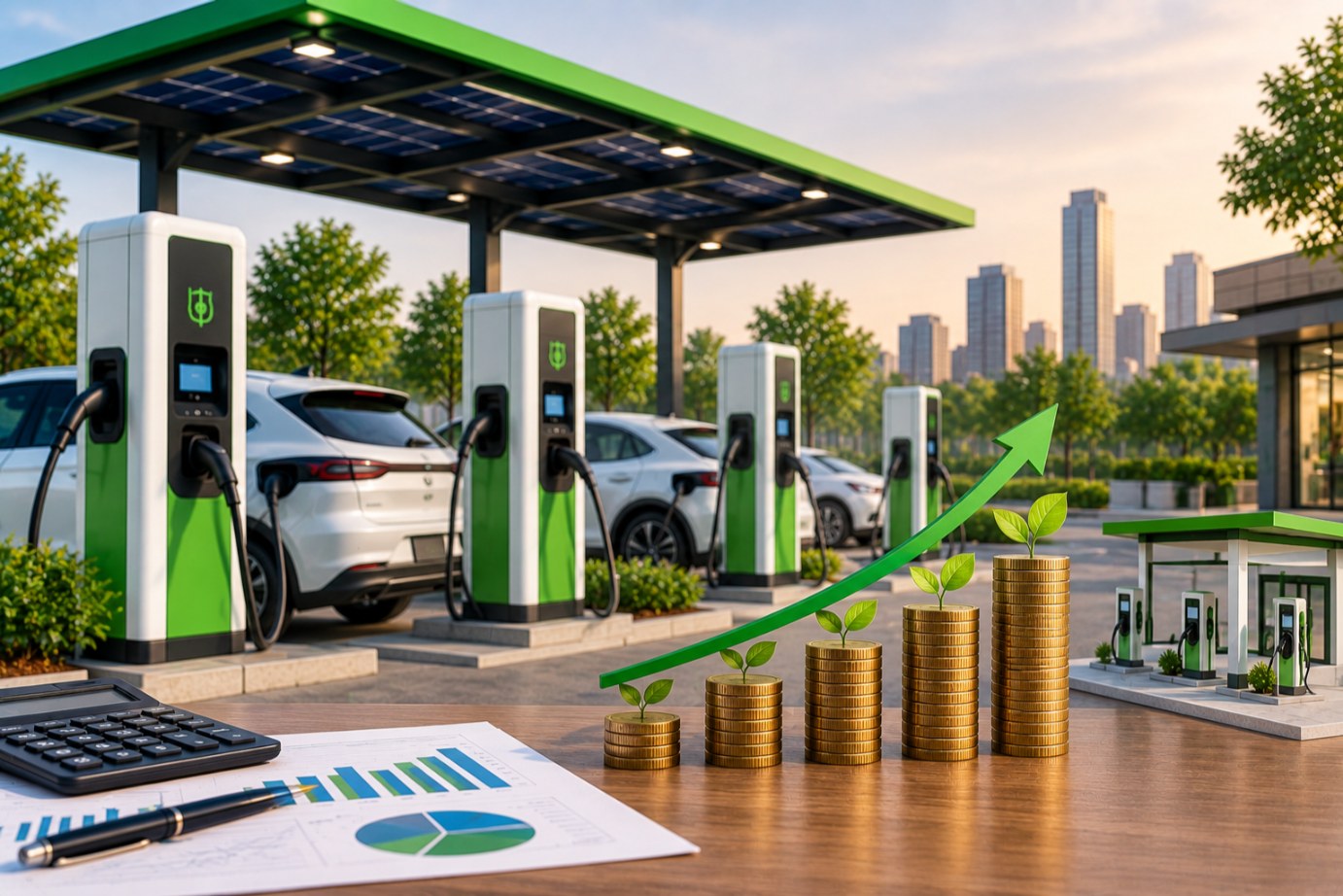
Highway EV Charging Station ROI
ROI depends on both revenue and operating expenses. A simplified formula is:
This is only an example. Actual ROI can vary significantly. Before investing, calculate:
- Conservative scenario
- Expected scenario
- Optimistic scenario
This helps account for uncertainty in EV adoption and charger utilization.
What Are the Main Operating Costs?
Highway charging stations have ongoing expenses. These can include:
Electricity
Usually one of the most significant costs.
Land
Lease or rental expenses can have a major effect on profitability.
Maintenance
Chargers, electrical systems and supporting equipment require regular maintenance.
Staff
Depending on the station, employees may be required for operations, cleaning, security or customer assistance.
Software
Charging management and network services may involve fees.
Security
CCTV, lighting and security personnel may be required.
Cleaning and Amenities
Highway facilities need regular cleaning and maintenance.
How to Make a Highway Charging Station Profitable
1. Choose a High-Demand Route
The route should have sufficient traffic and future EV potential.
2. Minimize Detours
Drivers should be able to access the station easily.
3. Provide Fast Charging
Choose charging capacity based on the needs of long-distance travelers.
4. Add Multiple Chargers
Multiple charging points can reduce waiting during peak periods.
5. Offer Amenities
Restaurants, restrooms and convenience facilities can improve customer satisfaction.
6. Maintain High Uptime
A highway traveler who finds a broken charger may not return.
7. Build Fleet Relationships
Electric taxis, logistics companies and commercial fleets can potentially provide recurring demand.
Common Mistakes When Setting Up a Highway EV Charging Station
Seven Mistakes to Avoid
- 1Choosing Land Based Only on Price. Cheap land is not necessarily a good charging location.
- 2Ignoring EV Traffic. Highway traffic doesn't automatically mean high EV charging demand.
- 3Underestimating Electricity Requirements. High-power chargers can require substantial electrical infrastructure.
- 4Installing Too Much Capacity. Excessive charging capacity can increase investment without generating sufficient additional revenue.
- 5Ignoring Amenities. A highway charging station is also a travel stop.
- 6Poor Signage. If drivers cannot see or find the station easily, utilization may suffer.
- 7No Future Expansion Plan. EV traffic is expected to evolve. The site should ideally allow additional charging capacity when demand increases.
Should You Start a Highway EV Charging Station Franchise?
Entrepreneurs who want to enter the EV charging industry without building every part of the operation independently can consider a franchise model. Depending on the provider, franchise support may include:
- Charger selection
- Site evaluation
- Installation
- Software
- Branding
- Technical support
- Operations
- Customer support
Before selecting a franchise partner, evaluate:
- Total investment
- Revenue-sharing model
- Equipment ownership
- Maintenance responsibilities
- Software fees
- Contract duration
- Operational support
- Expected utilization
Highway EV Charging Station Checklist
Before launching your station, make sure you have evaluated:
Location
Electricity
Chargers
Customer Experience
Business
Frequently Asked Questions
Conclusion
A highway EV charging station can play an important role in India's growing electric mobility ecosystem while creating a potential business opportunity for entrepreneurs and property owners.
However, success depends on much more than installing fast chargers. The strongest highway charging projects typically combine:
Before investing, conduct a detailed site survey, evaluate EV demand, understand electrical requirements and build a realistic financial model.
The objective should be to create a charging station that is convenient for travelers and commercially sustainable for the operator.
If you're planning to establish a highway EV charging station, Bharat Charge can help you explore charging solutions and business opportunities suited to your location and requirements.
For highway charging, the best station isn't simply the one with the fastest charger — it is the one that makes the entire charging stop easy, reliable and convenient for the traveler.
Ready to Build Your Highway Charging Station?
Bharat Charge can help you explore charging solutions and business opportunities suited to your location and requirements.
Talk to Bharat Charge