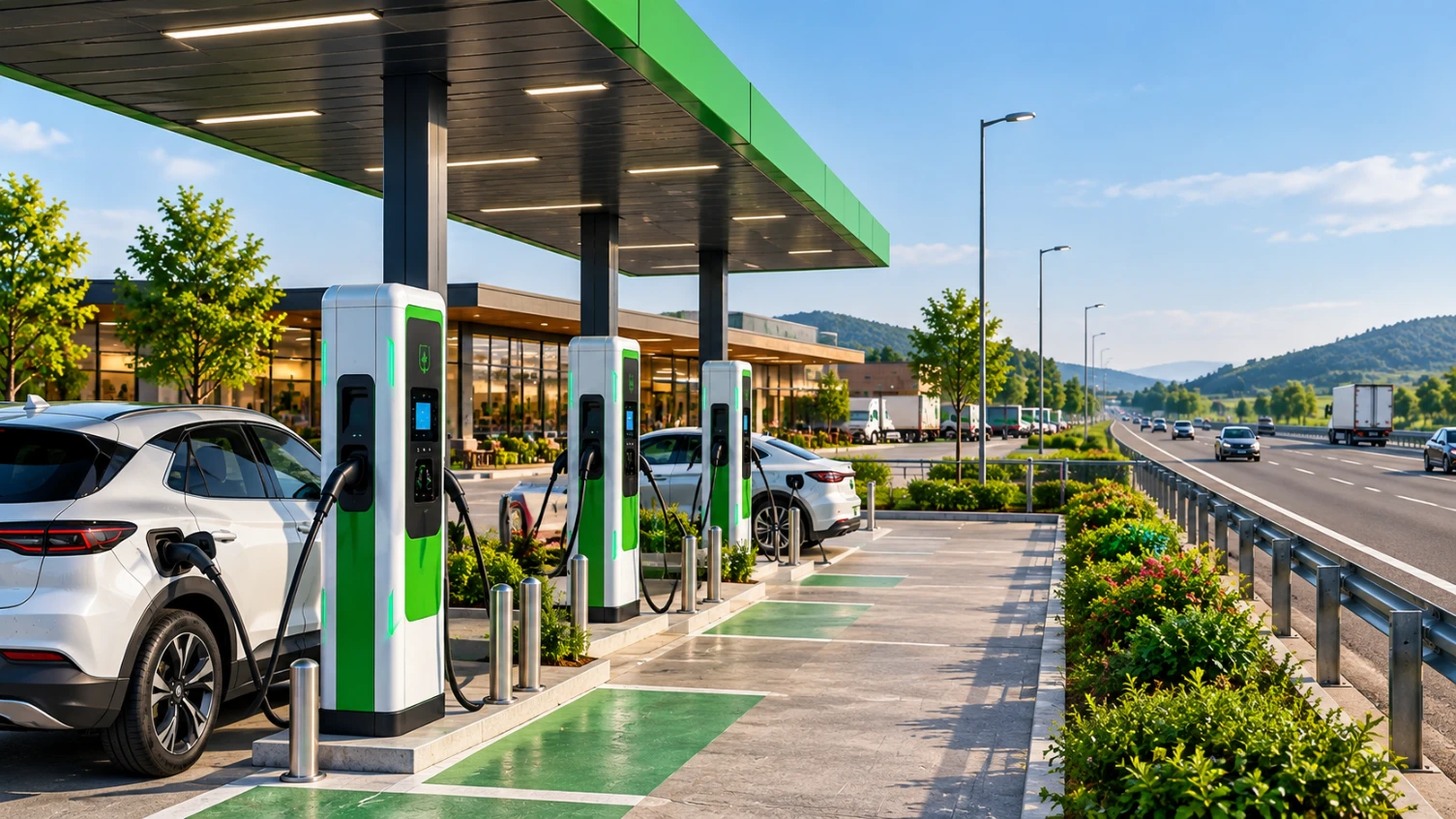
How Much Power Is Required for an EV Charging Station?
One of the most important technical considerations when setting up an EV charging station is determining the power required for the EV charging station.
Choosing the right charger is only one part of the process. The site also needs adequate electrical capacity to operate the chargers safely and reliably.
A small charging point with one AC charger may have relatively modest electricity requirements, while a highway charging hub with multiple high-power DC chargers can require significantly greater electrical infrastructure.
So, how much power does an EV charging station actually need?
The answer depends on:
- Number of chargers
- Charger power rating
- Number of vehicles charging simultaneously
- Type of EVs being served
- Expected utilization
- Available electrical connection
- Transformer capacity
- Future expansion plans
This guide explains how to estimate EV charging station power requirements and what investors should consider before setting up a charging station.
What Does Power Requirement Mean for an EV Charging Station?
The power requirement of an EV charging station refers to the electrical capacity needed to operate its charging equipment and associated infrastructure. For example:
- A 60 kW DC charger has a rated charging power of 60 kW.
- A 120 kW DC charger has a rated charging power of 120 kW.
- A 180 kW DC charger has a rated charging power of 180 kW.
- A 240 kW DC charger has a rated charging power of 240 kW.
If a station has multiple chargers, the potential total load increases. For example:
However, actual site power requirements are not always calculated by simply adding charger ratings. Electrical design also needs to account for simultaneous charging, auxiliary loads, equipment losses, power factor and other site-specific considerations.
AC vs DC Charging: Power Requirements
The first distinction to make is between AC charging and DC fast charging.
AC EV Chargers
AC chargers generally operate at lower power levels and are commonly used where vehicles remain parked for longer periods. Potential locations include:
- • Offices
- • Hotels
- • Residential communities
- • Workplaces
- • Shopping centres
- • Commercial parking
Because charging power is typically lower, the electrical infrastructure can also be less demanding than a high-power DC charging station.
DC Fast Chargers
DC chargers provide higher charging power and are designed for faster charging. They are commonly considered for:
- • Highways
- • Expressways
- • Busy urban roads
- • Fleet hubs
- • Taxi charging
- • Commercial EV operations
Higher-powered DC chargers require greater electrical capacity and may require additional infrastructure such as transformer upgrades.
Power Needs by Charger Rating
kW
How Much Power Does a 60 kW EV Charger Need?
A 60 kW DC charger has a rated output of 60 kW. However, the overall electrical requirement of the installation can be higher than the charger output because of electrical losses and supporting equipment.
A 60 kW charger can be suitable for:
- Urban charging
- Hotels
- Restaurants
- Offices
- Commercial parking
- Smaller highway locations
Before installation, the site should be assessed to determine whether the existing electrical connection can support the charger.
kW
How Much Power Does a 120 kW EV Charger Need?
A 120 kW DC charger can provide faster charging and may be suitable for locations with higher demand. Potential applications include:
- Highways
- Expressways
- Busy urban locations
- Shopping centres
- Fleet charging
- Commercial charging hubs
If multiple 120 kW chargers are installed, the required electrical capacity increases accordingly. For example:
The final electrical design should include appropriate margins and supporting loads rather than treating 240 kW as the complete site requirement.
kW
How Much Power Does a 180 kW EV Charger Need?
A 180 kW charger is a high-power DC charging solution. It can be suitable for:
- Highway charging stations
- Intercity routes
- High-traffic commercial locations
- Fleet operations
- Large charging hubs
A site installing one or more 180 kW chargers may require a substantial electrical connection and potentially additional distribution infrastructure. The available power should be evaluated before the equipment is selected.
kW
How Much Power Does a 240 kW EV Charger Need?
A 240 kW charger is designed for high-power charging applications. It may be suitable for:
- Major highway charging hubs
- Expressways
- High-traffic charging locations
- Fleet charging facilities
- Premium urban charging stations
Because of the high charging capacity, the electrical infrastructure can be significant. Depending on the site, the project may require:
- Higher sanctioned load
- Transformer
- High-capacity cables
- Electrical panels
- Protection systems
- Metering
- Earthing
- Other distribution equipment
Power Requirement for Multiple EV Chargers
When multiple chargers are installed, the power requirement increases. Consider a hypothetical station:
These figures represent the combined charger ratings. The actual electrical connection and infrastructure requirement should be determined through a professional electrical assessment.
Does a 240 kW Charger Always Consume 240 kW?
Not necessarily.
A charger rated at 240 kW can deliver up to its rated power when conditions allow, but actual power consumption varies. The actual charging power can depend on:
- Vehicle charging capability
- Battery state of charge
- Battery temperature
- Charging curve
- Charger configuration
- Power availability
For example, an EV capable of accepting only 100 kW will not draw 240 kW from a 240 kW charger.
How Is EV Charging Station Load Calculated?
A basic starting point is:
For example: 4 × 60 kW = 240 kW
However, a complete electrical load calculation may also consider:
- Simultaneous charging
- Auxiliary equipment
- Lighting
- Cooling
- Networking equipment
- Security systems
- Signage
- Other site loads
- Electrical losses
- Future expansion
What Is Sanctioned Load?
Sanctioned load refers to the electrical load approved for a consumer connection by the relevant electricity distribution utility.
An EV charging station must have an electrical connection capable of supporting the planned load.
If your existing property has insufficient sanctioned load, you may need to apply for:
- Load enhancement
- New connection
- Additional infrastructure
- Transformer installation
- Other electrical upgrades
The process and requirements can vary by location and electricity distribution company.
When Is a Transformer Required?
A transformer may be required when the charging station's power demand exceeds what can be supported through the existing electrical infrastructure. The requirement depends on:
- Total load
- Voltage level
- Available distribution infrastructure
- Utility requirements
- Charger configuration
- Site location
High-power charging stations are more likely to require substantial transformer and distribution infrastructure.
How Much Electricity Does an EV Charging Station Use Per Day?
Power and energy are different concepts.
A charger may have a power rating of 120 kW, but the amount of electricity it consumes depends on how long it operates and how much energy vehicles actually receive.
For example, if a charger delivers an average of 80 kW for two hours:
So the station has delivered approximately 160 kWh of energy during that period. This distinction is important when calculating electricity costs and charging station revenue.
Power vs Energy: An Easy Example
Think of a charger like a water pipe.
A higher-power charger can deliver energy faster, while total energy depends on how long the charger operates and the charging session.
This is why a 240 kW charger does not necessarily consume more energy than a 60 kW charger over an entire day.
If the 240 kW charger is used very little while the 60 kW charger is heavily utilized, the lower-rated charger could actually sell more energy.
How Much Power Does a Highway EV Charging Station Need?
Highway charging stations generally require greater power capacity because they often use DC fast chargers. For example, a highway station could potentially include:
- 120 kW chargers
- 180 kW chargers
- 240 kW chargers
The final requirement depends on the number of chargers and expected simultaneous usage.
Highway operators should also consider future demand. Instead of designing only for today's requirements, the electrical infrastructure can potentially be planned to accommodate additional chargers later.
Should You Install Maximum Available Power?
Not necessarily.
Installing the highest-power chargers available can increase:
- Equipment cost
- Electrical infrastructure cost
- Transformer requirements
- Connection requirements
- Project complexity
If the location has limited demand, the additional investment may take longer to recover.
A better approach is to match charging capacity to:
How to Reduce Electrical Infrastructure Costs
There are several ways to optimize the project.
Choose the Correct Charger Capacity
Don't install more charging capacity than your market requires.
Assess Existing Power
A site with suitable electrical infrastructure may require less additional investment.
Plan Load Management
Smart charging and load management can help distribute available power across chargers, depending on the equipment and operating model.
Plan Future Expansion
Design the site so that additional chargers can be added when demand increases.
Power Requirements and EV Charging Station ROI
Power infrastructure directly affects the economics of a charging station.
Higher charging capacity can provide faster customer turnaround, but it can also increase the initial investment. For example:
But:
The important factor is whether there is sufficient customer demand to use the additional capacity. This is why investors should calculate ROI based on realistic utilization rather than simply selecting the largest charger available.
Bharat Charge and EV Charging Infrastructure Planning
Planning the electrical infrastructure is an important part of setting up an EV charging station.
The appropriate charger configuration depends on the specific site. Factors such as:
- Location
- Vehicle traffic
- Charger type
- Power availability
- Expected utilization
- Future expansion
should be evaluated before finalizing the charging infrastructure.
Checklist Before Installing an EV Charging Station
Before starting installation, check:
Electrical
Commercial
Site
Technology
Frequently Asked Questions
Conclusion
Understanding the power required for an EV charging station is essential before selecting chargers or finalizing a site.
The required electrical capacity depends on:
A small urban charging point may require considerably less infrastructure than a highway charging hub equipped with multiple 180 kW or 240 kW DC chargers.
The key is to avoid both under-sizing and over-sizing the electrical infrastructure.
Before investing, conduct a proper site and electrical feasibility assessment, understand the available sanctioned load and select charging capacity based on realistic customer demand.
With the right planning, businesses can create charging infrastructure that provides a reliable customer experience while keeping the overall project commercially sustainable.
If you're planning an EV charging station, Bharat Charge can help you explore suitable charging solutions and business opportunities based on your location, charging requirements and long-term goals.
Not Sure How Much Power You Need?
Bharat Charge can help you explore suitable charging solutions and business opportunities based on your location, charging requirements and long-term goals.
Talk to Bharat Charge